Why it matters
Very little SEO work ships through the SEO team alone. Templates are built by engineering, pages are written by content teams, priorities are set in product planning, and brand mentions come from PR and community work. An SEO team that can't influence those teams ends up producing recommendations that never ship.
Leadership is what turns specialist knowledge into results. It means choosing the few things that matter, getting them onto other teams' roadmaps, and reporting the outcome in terms the business already uses. It also means building a team where people own their areas, challenge each other's ideas and keep learning, because search changes faster than any one person can follow.
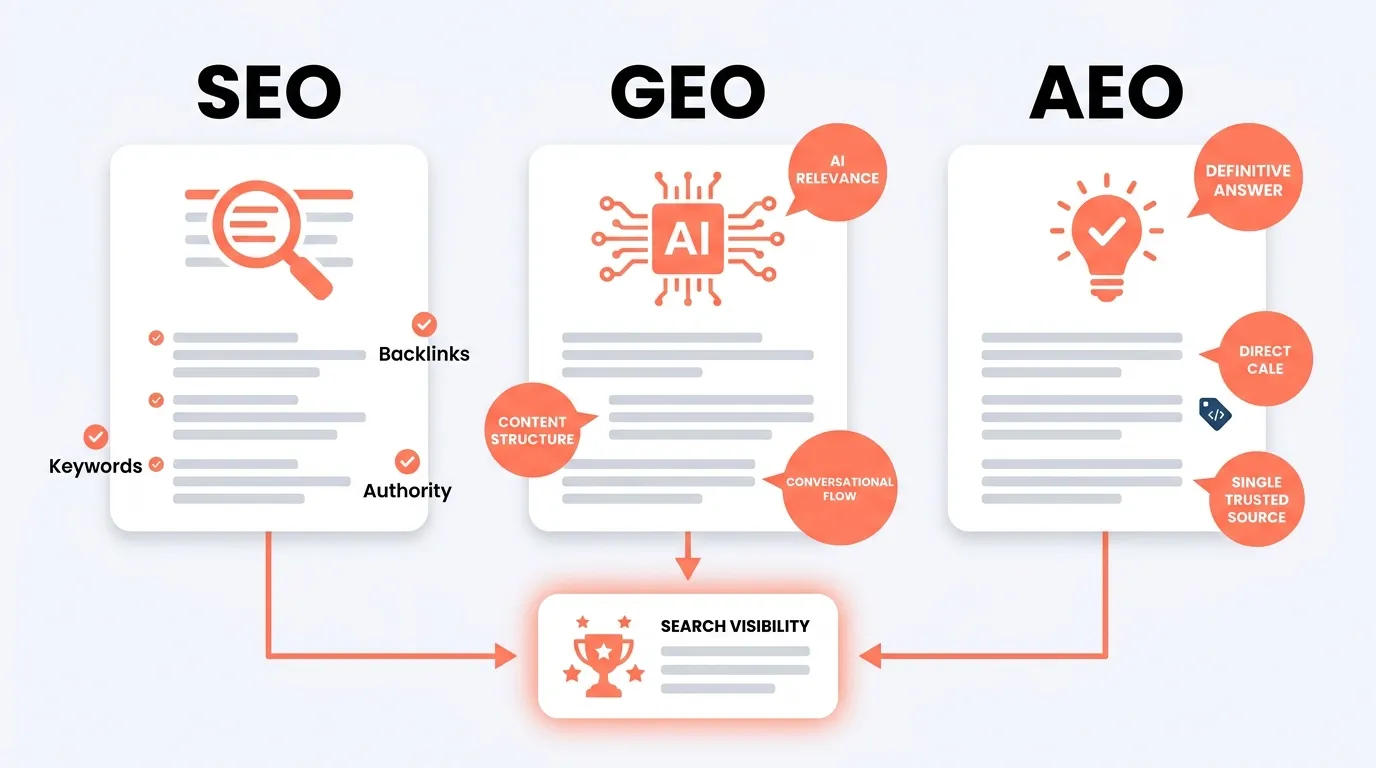
AI search widens the scope again. Being cited in AI answers depends on the site, but also on how the brand is described elsewhere: reviews, forums, partner sites and the press. A modern SEO and GEO team works across more of the company than it used to.
How I approach it
Define what the team owns and what it influences
A short team charter: the areas the team owns end to end, the areas where it advises, and how other teams can request work. It saves a lot of time later.
Hire for complementary strengths
A strong team mixes technical, content and analytical profiles. I look for people who can explain their work to non-specialists, since most of their impact goes through other teams.
Run a weekly planning cadence
One short weekly session to review priorities, unblock work and decide what moves next. Consistency matters more than the format.
Embed SEO in product rituals
SEO requirements go into the same backlog, refinement and acceptance steps as any other feature. When SEO has its own side process, it gets deprioritised.
Report outcomes in business terms
Monthly reporting leads with organic revenue, sign-ups or other business results, then explains the search metrics that drove them.
Give people real ownership
Each team member owns a market, a page type or a discipline, including the results. Ownership is also the fastest way for people to grow.
Make room for experiments
A small, regular slice of time for tests and pilots, such as new AI search tactics, with results written up whether they worked or not.
What good looks like
There is a written team charter that other teams can read.
A weekly planning session happens every week.
Every team member owns an area and its results.
SEO requirements live in the product backlog with acceptance criteria.
Monthly reporting starts with business results.
Methods and decisions are documented in a shared space.
Experiments are logged with their result and what was learned.
Common mistakes
Running SEO as a service desk
When the team only answers requests, it never gets to the structural work that drives most growth.
Reporting rankings to executives
Rankings matter to the team. Leadership needs to see revenue, conversions and the risks to them.
One person as the bottleneck
If every decision goes through the lead, the team can’t scale and people stop growing.
No time to learn
Search changes every few months. A team with no time for learning works from an outdated playbook.
Treating GEO as someone else’s job
AI visibility touches content, PR, community and product. The SEO team is usually best placed to coordinate it.
In practice
At FLOYT Mobility I built and led a team of 4 SEO Managers and owned the organic growth function from strategy to execution. We ran weekly planning cadences, and I worked to build a culture where people challenged ideas and took real ownership. At Oi I managed SEO strategy and a team of 3.
What colleagues say about working with me is on the About page. For how I plan and prioritise the work itself, see SEO and GEO strategy.
Frequently asked
How big should an SEO team be?
It depends on the number of markets, page types and how much engineering capacity the team can influence. A small team with clear ownership and a seat in product planning often achieves more than a large one that only makes recommendations.
Where should SEO sit in the organisation?
Close to product and engineering, because that is where most SEO work ships. Wherever it reports, it needs a direct line into product planning.
How do you get engineering time for SEO work?
By writing SEO work as product requirements, with a clear user and business case, acceptance criteria and an estimate of the impact. Work that is specified like a feature gets prioritised like one.
Should GEO be a separate team?
Usually not. GEO depends on the same pages, data and brand signals as SEO. It works best as part of the SEO team’s scope, coordinated with content, PR and community teams.