Why it matters
Most sites that underperform in search do so for a handful of reasons: important pages that aren't indexed, templates that hide content behind JavaScript, internal links that point to the wrong URLs, or content that doesn't match what people search for. An audit finds those few reasons and separates them from the noise.
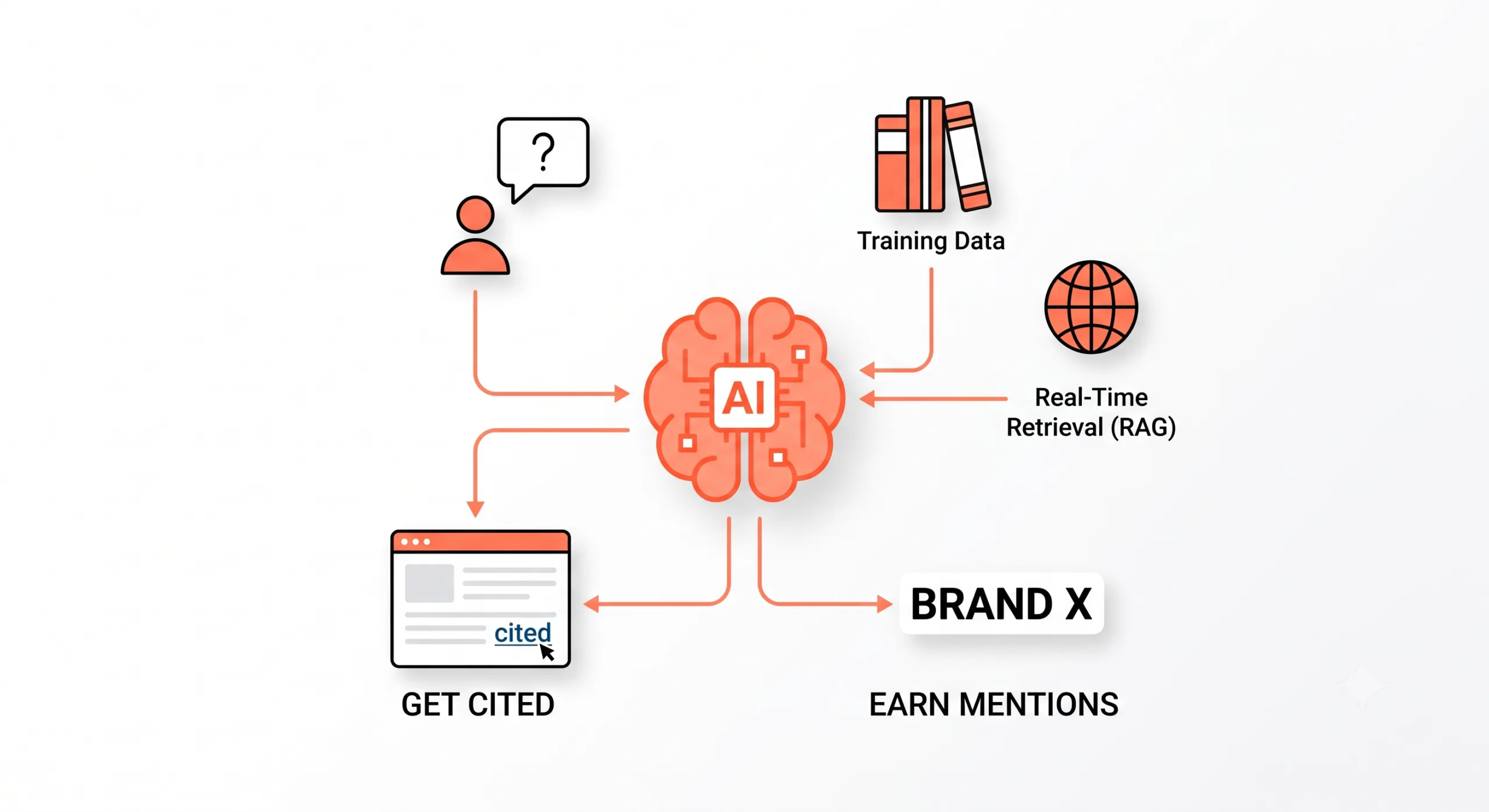
AI search adds a second layer. Systems like ChatGPT, Perplexity and Google AI Overviews retrieve pages, summarise them and cite some of them. To be part of those answers, a page has to be reachable by the crawlers these systems use, its content has to be easy to extract, and the brand has to be described consistently across the web. Google's own guidance is that its AI features rely on the same fundamentals as Search, so a good technical audit already covers much of this. What it doesn't cover is measurement: whether your brand is actually named or cited, and which sources appear instead.
An audit is the starting point for everything else in organic growth. Strategy, templates and content plans all assume the site can be crawled and understood. If that assumption is wrong, the rest of the work underdelivers.
How I approach it
Agree what the site is for
Before crawling anything, I list the page types that earn traffic and revenue, the markets that matter and the questions the audit has to answer. That keeps the review focused on the templates where a fix moves a business number.
Crawl the site the way a search engine would
A full crawl with Screaming Frog, compared against the XML sitemaps and the Page indexing report in Google Search Console. The gaps between what exists, what is linked and what is indexed are usually where the biggest problems sit.
Check what crawlers actually request
Server logs show which URLs Googlebot and AI crawlers really fetch, how often, and what they get back. I also review robots.txt and any CDN bot protection, because AI crawlers are often blocked by accident rather than by decision.
Review rendering and performance
I compare the raw HTML with the rendered page for each key template. Main content, links and structured data should be in the initial HTML. Core Web Vitals are checked on field data per template, not on a single lab test of the homepage.
Assess content against search intent
For each priority topic: does a page exist, does it answer the question in its opening lines, and how does it compare with the pages that rank and get cited today? This is where competitor benchmarking fits, at the level of topics and page types.
Measure AI visibility
I run a fixed set of prompts across ChatGPT, Perplexity and Google AI Overviews and record whether the brand is named, whether it is cited, and which sources appear instead. Answers vary between runs, so the same prompt set is repeated over time and read as a trend.
Prioritise and hand over
Every finding gets an expected impact, an effort estimate and an owner, and the top items are written as tickets engineering can pick up. The output is usually ten to twenty actions, ordered, with the evidence behind each one.
What good looks like
Every important template returns a 200 status, is indexable and is listed in an XML sitemap.
Canonical tags, hreflang annotations and internal links all point to the same preferred URLs.
Main content, links and structured data are present in the initial HTML.
Decisions about AI crawlers in robots.txt and at the CDN are deliberate and written down.
Core Web Vitals are tracked on field data for each key template.
Each key page answers its main question in the first lines, in plain sentences.
Brand facts (name, what it does, products, people) are consistent on the site and on external profiles.
A fixed prompt set for AI visibility exists and is re-run on a schedule.
Every finding has an owner, an effort estimate and an expected impact.
Common mistakes
Reporting tool scores instead of problems
Health scores and issue counts are easy to produce and hard to act on. A list of 300 warnings hides the three issues that matter.
Auditing every page with the same depth
A site with a few revenue templates and thousands of archive pages needs most of the attention on those few templates.
Blocking AI crawlers by accident
Blanket bot rules at the CDN or an old robots.txt line can shut out crawlers the business never meant to block. Check what the logs say, not only what the file says.
Treating one AI answer as a measurement
The same prompt can return different answers and sources from one run to the next. A single screenshot is an anecdote, a repeated prompt set is data.
Stopping at the report
An audit only pays off when the fixes ship. Writing the top findings as tickets, with acceptance criteria, is part of the audit.
In practice
At FLOYT Mobility I started the company's AI search work: optimising content for the crawlers behind Gemini, Perplexity and ChatGPT, and running a Reddit pilot to build the community presence and brand mentions that AI systems learn from. Before that, technical audits were a regular part of leading SEO across 5 markets at TUI and 14 countries at Uniplaces, where indexation problems tended to repeat across every market at once.
I now measure AI visibility with my own tooling, described on the AI Visibility Monitor page. For the background on how AI systems choose what to cite, see AEO explained. The full role history is on the About page.
Frequently asked
How is an AI search audit different from an SEO audit?
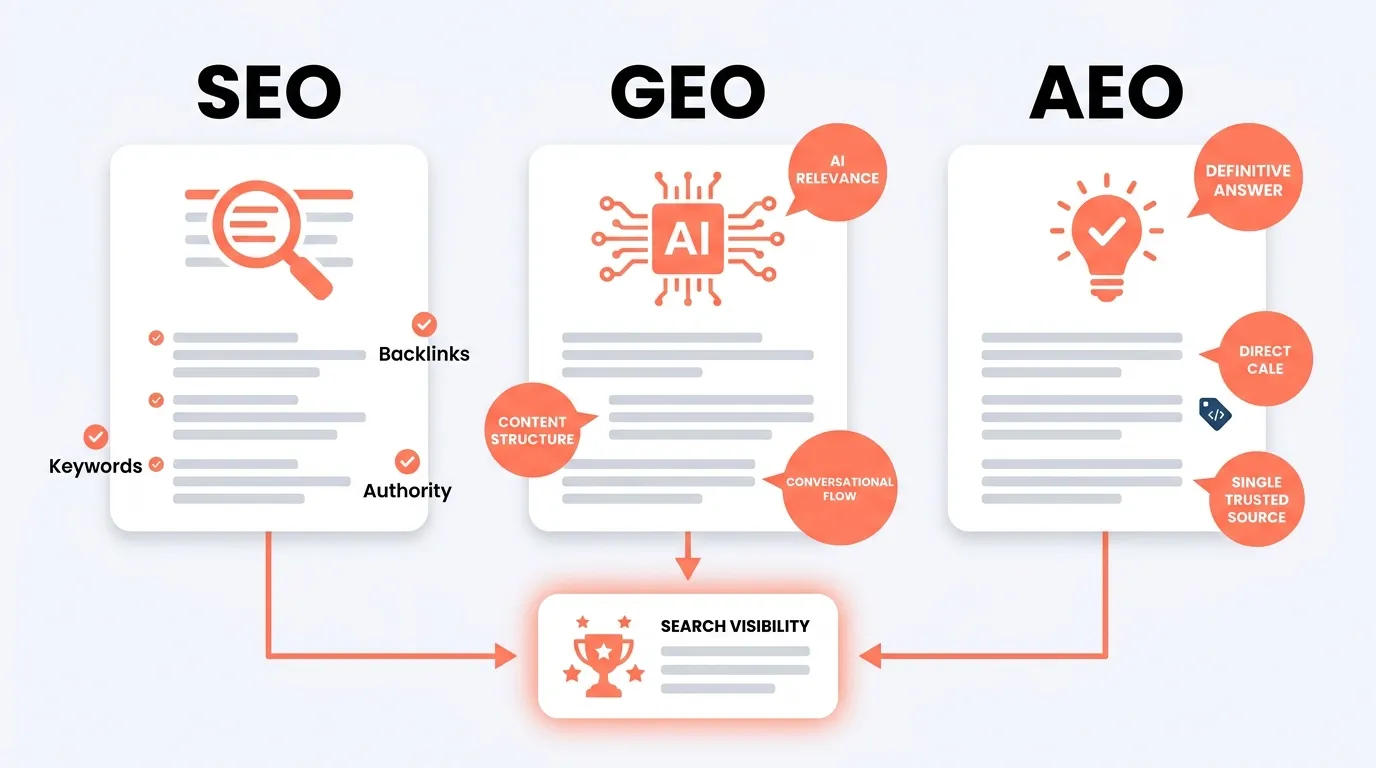
Most of the technical work is the same, because AI systems rely on pages being crawlable and easy to understand. The difference is measurement. An AI search audit also checks which crawlers can reach the site and records whether the brand is named or cited in AI answers for a fixed set of prompts.
Should I block AI crawlers?
It's a business decision with trade-offs. Some platforms use separate crawlers for model training and for search features, and they can be allowed or blocked separately. Google-Extended is a robots.txt control for Google's AI models and does not affect Google Search rankings. Blocking a search-related AI crawler usually means your pages can't be cited in that system's answers.
Does an llms.txt file help?
There is no consensus. llms.txt is a proposed standard, and Google has said it doesn't use it for Search. I don't treat it as a priority, but it does no harm if it is accurate and kept up to date.
How often should a site be audited?
A full audit makes sense before a big change, such as a migration or a new market, and roughly once a year otherwise. In between, monitoring of indexation, Core Web Vitals and AI visibility catches most problems earlier.